🪖 Finnish Defence Forces — Service Safety & Incident Documentation
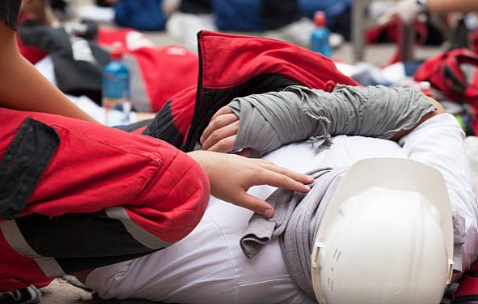
Training injury documented on the spot — in the field, on base, or during a KRIHA international crisis management operation.
Server-verified timestamp — valid for Military Injuries Act (palvelusvammalaki) applications
GPS location on the training area — precise location without manual entry
Anatomical pain coordinates — injury area on a body map, no verbal guesswork
Recovery data from service period — pain history throughout service or operation
See how it works → Request a Demo
Incident Report

A familiar situation in medical services?

Documenting training injuries is challenging in field conditions — there is no paper, conditions change, and the conscript no longer remembers the details the following day. Pain2Care solves the problem right where it starts.

🌲
Injury occurs in the field
A training injury happens in the forest or on a firing range — there is no paper, no doctor on site, and the exact location goes unrecorded. In a later investigation, the location is "somewhere on the training area".
📋
Service injury claim left unresolved
A conscript or professional staff member later applies for a service injury (palvelusvamma) compensation — but the original documentation cannot be found or is incomplete. The claim is delayed or rejected.
🔄
KRIHA operation documentation
An injury sustained during an international crisis management operation (KRIHA) must be documented despite language barriers and difficult conditions. Paper forms are not suited to field environments.
📉
Recovery without tracking data
A conscript or returning crisis management soldier suffers after-effects from an injury — but there is no pain history. The doctor is forced to assess the situation based on memory alone.

Incident Report — module

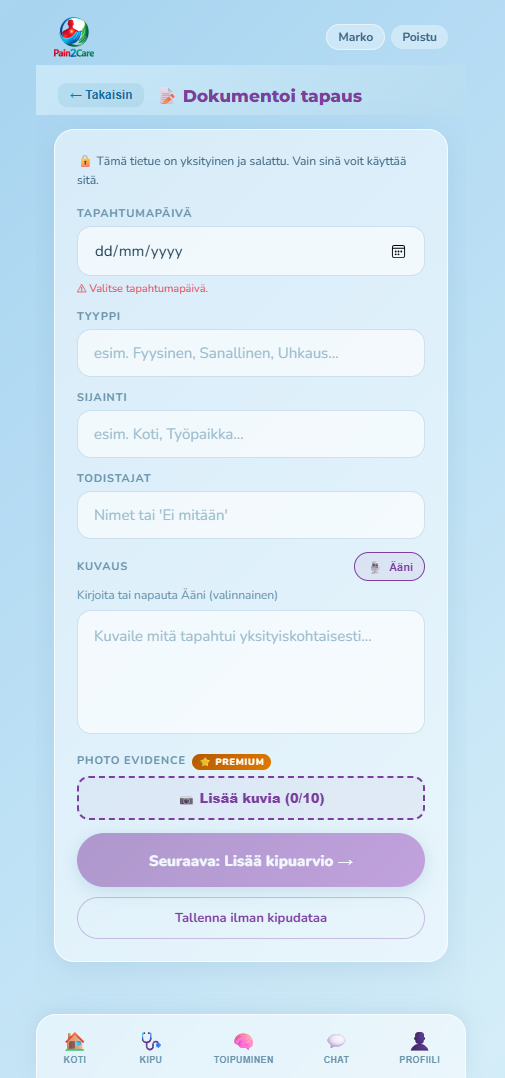
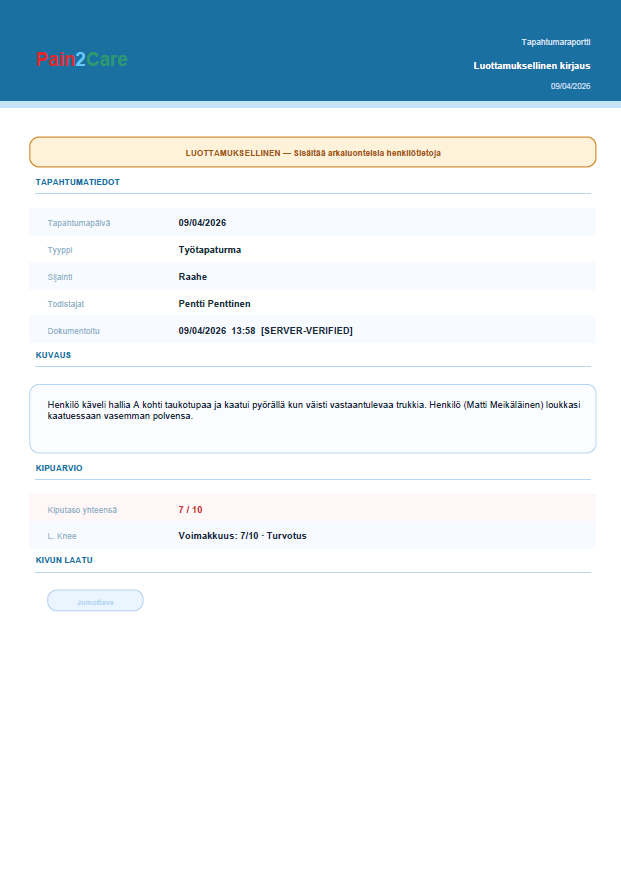
A conscript, reservist, or professional staff member documents the injury immediately at the scene — in the field, on base, or during an operation. Medical services receive indisputable evidence: a server-verified timestamp, GPS location, photographs, and anatomical pain coordinates.

🪖 Incident Report
Indisputable record from the moment of injury

The service member logs the injury in a few minutes at the scene — even without an internet connection. The timestamp, location, and conditions are captured on the server at the time of entry and cannot be altered afterwards.

  • Server-verified timestamp — valid for Military Injuries Act applications
  • GPS coordinates from the training area or base
  • Witness names, contact details, and conditions in the same document
  • Description as free text or voice note
  • PIN-protected — only authorised persons have access
Incident report form
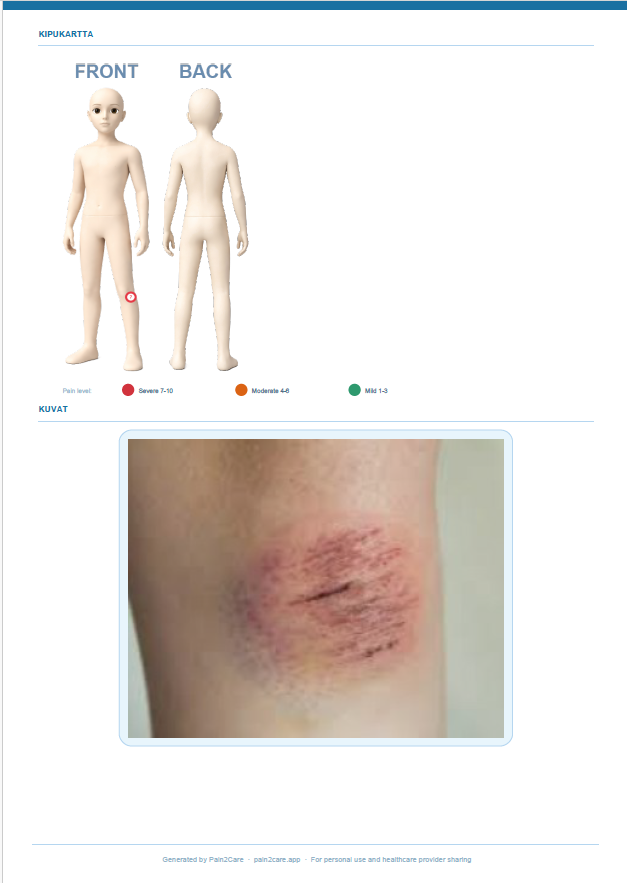
📸 Photo Evidence
Photos of the scene as part of the report

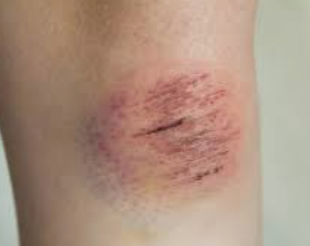
Photos are taken through the app and automatically attached to the report with timestamps and location data. The medical officer or investigating authority sees exactly what the scene looked like — not just words.

  • Multiple photos per incident report
  • Photos linked to the report's timestamp chain — no loose images
  • AES-256-GCM encrypted storage — sensitive data protected
  • Displayed in the PDF report as a dedicated section
Photo evidence
🗺️ Pain Assessment
Injury area precisely located — no verbal descriptions

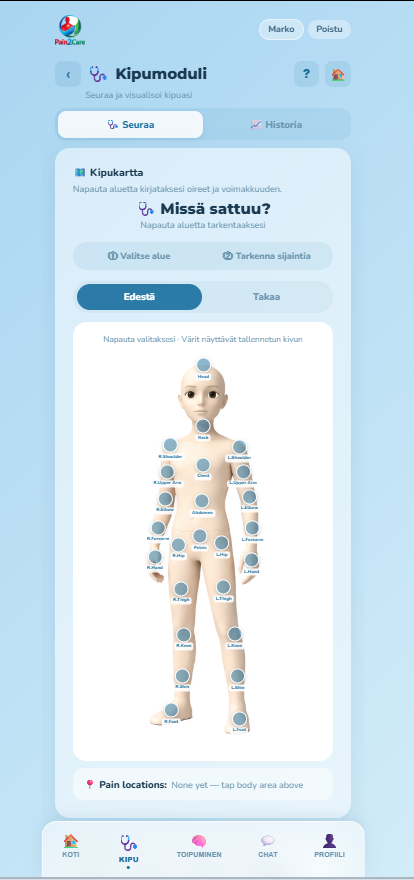
The service member marks the injury area on a body map and rates pain intensity from 1 to 10. The doctor receives exact anatomical coordinates — "sore knee" is replaced with precise sub-region coordinates.

  • 3D body map, front and back
  • Pain intensity 1–10 for each area
  • Precise anatomical sub-regions (e.g. "L. patella")
  • Pain quality: burning, stabbing, radiating…
Pain assessment
📋 Incident History
All incidents in one view

Every recorded injury is saved to a list with a date and summary. The medical officer or HR has immediate access to the service member's incident history — and the report can be shared with a single tap.

  • All incidents listed in chronological order
  • Quick search and filtering
  • Each incident opened with a single tap
  • PIN-protected — only authorised persons have access
Incident history
📄 PDF Incident Report
One tap — ready report

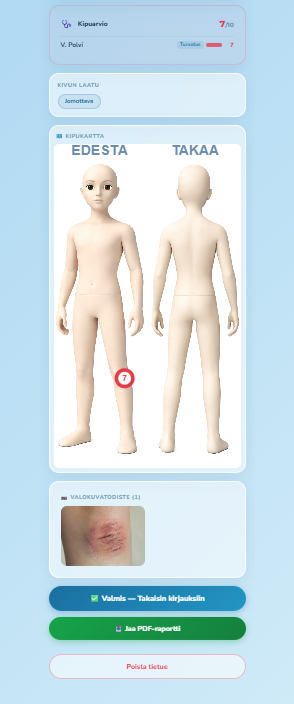
A PDF report is generated instantly from the incident record — ready to be sent to medical services, to PVAH (the Finnish Defence Forces administrative system), or for a Military Injuries Act application. Contains everything required in a legally valid format.

  • Server-verified timestamp — reliable legal evidence
  • Pain map, photographs, and witness details
  • Photo evidence in its own section on a second page
  • 7 languages — KRIHA operations covered
📄 INCIDENT REPORT — PAGE 1
PDF page 1 PDF page 2

Pain Module — Recovery Tracking
Recovery data from the service period

The pain module produces continuous, server-verified data on recovery progress — medical services and service injury matters are based on facts, not on recollections.

🗺️ Daily Pain Log
Daily pain log — recovery as data

The service member logs their pain on a body map every day. The doctor or medical officer has access to an objective timeline from the day of the injury — no more relying on memory or verbal guesswork.

  • Daily logging automatically builds a recovery history
  • Server-verified timestamp for every entry
  • Pain intensity 1–10 on the body map
  • Cannot be edited retroactively — reliable evidence
Body map
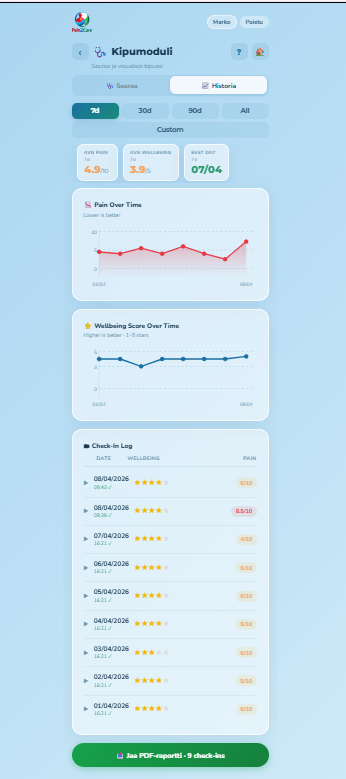
📈 Recovery Trends
Pain trend as a clear chart — service fitness as data

The pain history view shows recovery progress: 7 days, 30 days, 90 days, or the full service period. Is the service member recovering towards normal fitness? The data answers — the doctor no longer needs to guess.

  • Pain trend: week, month, 90 days, all time
  • Every entry listed — opened with a single tap
  • Wellbeing chart alongside (1–5 stars)
  • Server-verified timestamp — cannot be edited
Pain history
📄 Pain History PDF
Recovery report for a selected period

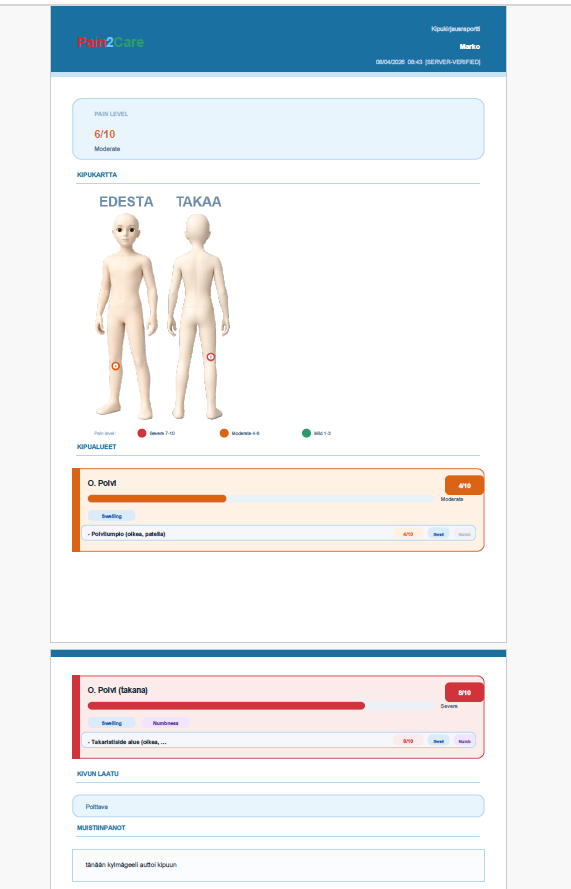
A PDF is generated from the pain module with a single tap — covering the full service period or a specific timeframe. Valid as an attachment to a Military Injuries Act application or a doctor's assessment.

  • Pain trend as a chart and table
  • Pain map of the injury area
  • All notes and diary entries
  • Server-verified timestamp — reliable official document
📄 PAIN HISTORY PDF
Pain history PDF

Reports directly to Defence Forces systems

Pain2Care operates as a standalone app — but incident reports and recovery data can be delivered directly to existing Finnish Defence Forces systems.

📄
PDF to medical services
Incident report and pain history in PDF format — the service member or the unit's medical officer forwards it with a single tap.
📊
Structured data
Report data in JSON/CSV format — easily importable into PVAH (Finnish Defence Forces administrative system) or other Defence Forces management systems.
🔗
API / Webhook
By agreement, a direct API integration — a new incident report is automatically forwarded to a designated system or email address.
Compatible with existing Defence Forces systems
Pain2Care does not require replacing current systems. Reports are delivered where they are needed.
PVAH SAP HR Field Medical Email Archive PDF Archive Defence Forces Intranet
🔒 Security & GDPR

Injury and health data of service personnel are sensitive — protection is handled according to best practices.

🇪🇺 EU servers
All data is stored on Google Firebase in Frankfurt, Germany — it does not leave the EU. GDPR-compliant.
🔐 TLS 1.3 encryption in transit
All data transmission between the app and server is encrypted with TLS 1.3. No plaintext data on the network.
🗄️ AES-256-GCM encryption
Photos are encrypted with AES-256-GCM on the device before upload — even the server administrator cannot access the images.
🔑 PIN protection
Incident reports and pain data are protected by a user-specific PIN code. Only the relevant parties have access to their own data.
📋 GDPR-compliant
Users have the right to access, correct, and delete their own data. Privacy policy available. Tech4Pioneers Oy, Oulu.
⏱️ Server-verified timestamp
The timestamp is generated on the server at the time of entry — it cannot be altered afterwards. Suitable for Military Injuries Act applications.

Two optional add-on modules

In addition to incident documentation and pain tracking, Pain2Care also supports service personnel in psychological recovery and peer support — especially after demanding operations.

🌿
Trauma Module

12 evidence-based recovery modules: somatic therapy, mindfulness, and CBT. Breathing exercises, visual therapy, trigger mapping and coping plan, crisis SOS, and daily wellbeing check-in. Particularly suited for psychological recovery after serious injuries and KRIHA operations.

12 guided modules Visual therapy Crisis SOS KRIHA-ready
💬
Community

An anonymous peer support community for those recovering from similar situations. Share experiences and find a sense of belonging — without revealing your identity. Supports long-term recovery alongside professional help.

Anonymous Peer support Moderated Safe space
🪖 Finnish Defence Forces Partnership
Better documentation —
more reliable service safety.
A Pain2Care partnership gives the Finnish Defence Forces a modern incident documentation tool — field-ready, legally valid, and integrable with existing systems.
📋
Field-ready
Works in the field — even with a weak connection. GPS is recorded automatically, and entry is possible with gloves on.
⚖️
Military Injuries Act compliance
Server-verified timestamp and GPS documentation meet the evidentiary requirements of the Military Injuries Act.
🌍
KRIHA-ready
7 languages, works in international operations. The PDF report is readable in any country.
Get in touch — schedule a demo →
GDPR-compliant · EU servers · AES-256-GCM encrypted
How onboarding works

A simple process — first reports to medical services within a week.

1
Get in touch and schedule a demo
We review requirements, user groups (conscripts, professional staff, reservists, KRIHA), and any integration needs. The demo takes approximately 30 minutes.
2
Agree on a deployment model
B2B agreement per unit, PVAH integration, or a discount code for the entire garrison — we tailor a solution to the needs of the Finnish Defence Forces.
3
Service personnel adopt the app
Conscripts, professional staff, or reservists download Pain2Care from Google Play or the App Store. Activation takes minutes — no installation project, no IT support tickets.
4
Incident documentation improves immediately
From the very first training injury, documentation is of higher quality, more accurate, and legally more robust. Medical services, service injury matters, and recovery monitoring all become easier.

Why Pain2Care?

The same app serves both the Finnish Defence Forces and the service member — both benefit.

🪖
Finnish Defence Forces benefits
  • Reliable incident investigation — server-verified data, GPS, and photographs — no more "I don't remember exactly"
  • Smoother service injury claims — documentation ready for Military Injuries Act applications
  • Field-ready — works on training areas, at bases, and during KRIHA operations
  • Objective fitness data — pain history supports the doctor's assessment of recovery and fitness for duty
  • Integrates with PVAH — reports transferred directly into Defence Forces systems
👨‍✈️
Service member benefits
  • Own documentation immediately — injury recorded from their own perspective before memories fade
  • Legal protection — server-verified timestamp and GPS are legally valid in Military Injuries Act applications
  • Pain history for doctor visits — recovery documented, no need to recall pain from a month ago
  • Psychological support after KRIHA — the trauma module supports recovery alongside professional help, available 24/7
  • Private — PIN-protected, data is shared only with whom the service member chooses

Request a Demo

Fill in the form and we will be in touch within 1–2 business days.

Or write to us directly: info@pain2care.com